

The Danger of a Monolith
I
I watched the movie adaptation of John Grisham’s A Time to Kill many years ago and the defense’ closing remark is a speech I will never forget. Matthew McConaughey’s character stood before the jury and painstakingly described the horrific assault suffered by a little girl. Every detail was uncomfortable and painful to imagine and when he had finished, he paused and said; “Now imagine she’s white.” That point landed with the force of a hammer. Sometimes we only recognise injustice when we can imagine ourselves inside it.
Over the past few days, I have watched videos of anti immigrant protests in parts of Northern Ireland and Scotland, the angry crowd shouting slogans, carrying placards and speaking about immigrants as though they are threats, burdens, as though they are one story. And every time I watch, I find myself thinking about something Chimamanda Ngozi Adichie said in her famous TED Talk, The Danger of a Single Story.
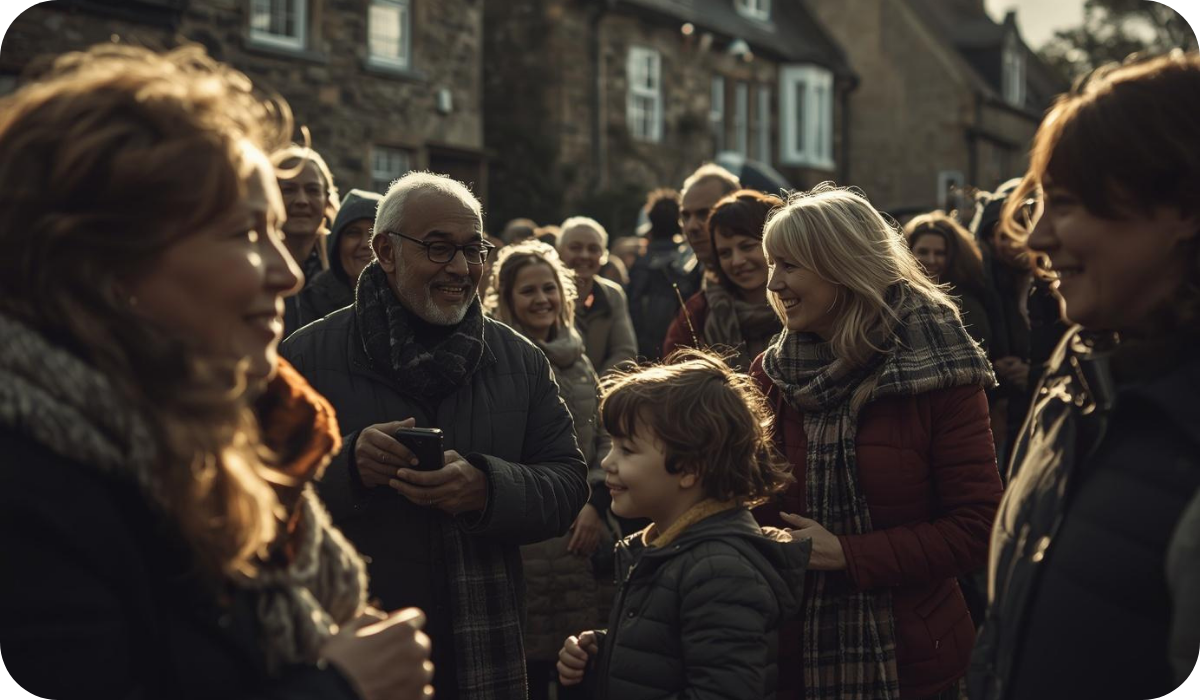
She argued that the problem with stereotypes is not necessarily that they are completely untrue, but that they are incomplete, making one story become the only story and the moment that happens, we stop seeing people. Instead, we start to see categories. We start to see labels instead of neighbours. These are dangerous things. Dangerous because once a person becomes a label, it becomes easier to fear them, dismiss them, blame them, and the worst emotion of all, hate them.
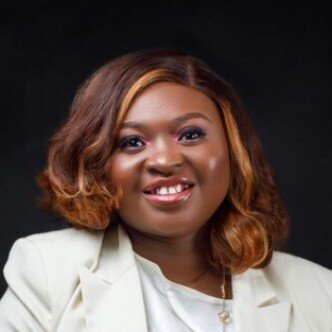
I am a Black immigrant woman living in Scotland but before I am any of those labels society likes to use, I am a wife and a mother. I am the woman who reminds her children to put on their jackets before school because Scottish weather has a mind of its own, who worries when my husband is running late and has not answered his phone.I am the woman trying to build a future, pay bills, contribute to my community and leave Scotland better than I found it. Like thousands of other immigrants, my life is far less dramatic than the stories often told about us.
“No one deserves to be defined by a stereotype. Behind every accent, skin colour, and journey is a human story.”
AyaLash
I work, pay taxes, volunteer, sit in school assemblies, complain about the weather, worry about my children, and I celebrate my victories, big or small. In other words, I live an ordinary life, and perhaps that is precisely what some people fail to see.
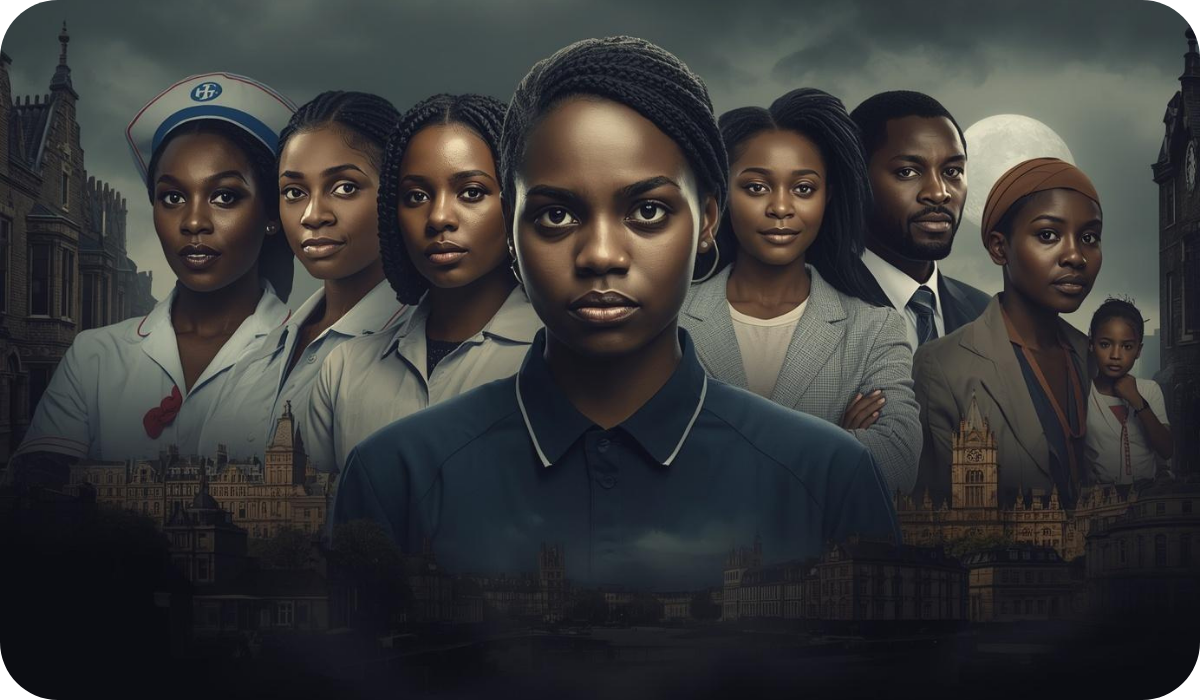
I run a platform dedicated to documenting the stories of Black immigrants who contribute to Scotland every day. The nurses, teachers, engineers, care and support workers, the artists, entrepreneurs,parents, basically people trying to build lives, belong and contribute to Scotland. Yet when I hear some of the rhetoric surrounding immigration, none of those stories seem to matter, because the immigrant has now become a monolith. The media has helped to shape the immigrant into a single identity and a convenient villain and that is where the danger lies.
The danger of a monolith is that it strips people of their humanity and convinces us that millions of people can be understood through a handful of assumptions. A monolith tells us that every immigrant thinks the same, behaves the same, contributes the same, and should be judged the same. However, history shows us where that road leads. Every form of prejudice begins with simplification and every form of discrimination begins with reducing human beings into categories. Race. Religion. Nationality. Gender. Accent. Skin colour. First comes the story, then the stereotype, then the suspicion, the hostility and then, the violence.
Recently, Scotland was shaken by the death of Dr. Fortune Gomo, a Zimbabwean scientist, mother and respected professional who was stabbed to death in Dundee. A man has been charged with her murder and the legal process is ongoing. At the time of writing, authorities have not stated that the killing was racially motivated. However, that is not the point I am making. Many Black people saw that story and felt fear. because we recognised ourselves in that story.
When I read about Dr. Fortune Gomo, I saw a woman, someone's daughter, friend, colleague. I saw someone who had made a life for herself and probably woke up that morning with plans for tomorrow and for a moment, I stopped reading as a storyteller and started reading as a wife and mother. Fear has a way of making things personal and I found myself imagining my own family. I imagined my husband and my children, and the ordinary journeys we make everyday. I imagined the journeys we rarely think twice about because normal life depends on the assumption that we will arrive home safely.
Then I wondered how many other Black families had read the same story and quietly asked themselves the same question, ‘What if that had been one of us?’ Those questions become even heavier when they exist alongside images of crowds chanting against immigrants, alongside social media posts portraying migrants as invaders and those conversations that suggest some people belong less than others.
Fear does not always begin with violence. Sometimes it could begin with dehumanisation, or language, or a story that has been repeated so often, that people stop questioning it. The immigrant is taking your job. The immigrant is taking your house. The immigrant is taking your benefits. The immigrant is the problem. Then eventually the immigrant stops being a human being altogether and therein, lies the danger of a monolith.
Imagine for a moment that the faces in those protest videos were your family. Imagine your daughter asking why someone dislikes her before they know her. Imagine your son learning that some people have already formed an opinion about him because of the colour of his skin. Imagine your wife checking her surroundings a little more carefully because a crowd has decided people who look like her do not belong. Imagine your husband hearing the phrase "go back home" despite spending years building a life, contributing to society and raising a family. Imagine carrying that tension every time your loved ones leave the house. Imagine all these things, not because something has happened, but because something might.
Now imagine they are white, and they were born here. Imagine the anger you would feel if they were treated as less human because of how they looked.
The truth is that dignity should not depend on whether we can personally identify with the victim but sometimes the quickest route to empathy is asking people to place themselves in someone else's shoes. The tragedy of racism is not only what it does to those who experience it, but what it does to society itself. Racism narrows our vision and poisons public discourse. It replaces curiosity with suspicion, understanding with fear and convinces ordinary people that their neighbours are enemies.
A few nights ago, after watching some of the footage from these protests, I looked at my children. They were doing what children do, talking, laughing, arguing over something insignificant that will not matter next week, and I felt an unexpected heaviness.No parent wants to wonder whether their child will someday be hated for something they cannot change. No parent wants to explain to a child that their skin colour may cause some people to see them as a threat before they see them as a person. No parent wants to have that conversation at all, yet countless Black parents have had versions of it because experience tells us we may have to. That is why racism cannot be dismissed as mere opinion, be excused as frustration nor be normalised. Behind every racist slogan is a real person who must live with its consequences.
Scotland is not perfect. No country is, but one of the things I have always admired about Scotland is its capacity for kindness. I, and my family, have experienced it and I know many immigrants have too. The overwhelming majority of Scots I have met are decent people who believe in fairness and dignity.
Which is precisely why racism must be called out when it appears because we care about the kind of Scotland we want to build together. We want a Scotland where nobody is reduced to a stereotype, where disagreement does not become hatred, where immigrants are judged by their character and contribution, not by rumours and assumptions. We want a Scotland where every child can walk down the street without wondering whether their skin colour makes them a target.
The answer to a monolith is not another monolith. The answer is stories. Stories remind us that people are complicated and cannot be reduced to headlines. Stories remind us that behind every accent is a journey, that behind every face is a history and that behind every immigrant is a human being. Once we truly see the human being, racism becomes much harder to justify.
That is why Black Scottish Stories exists.Every story we tell chips away at the dangerous illusion that any group of people can be understood through a single narrative. No one deserves to be reduced to a stereotype, live in fear or ever become a monolith.
This is a wonderful write up. Thanks for using your Platform to speak for the black with good hearts
What made me leave Nigeria and move to Scotland in 2022?
For many people, migration is about seeking better opportunities. For me, it was about seeking safety.
I am a Middle Belt girl who grew up in Northern Nigeria. From a young age, I witnessed religious crises, sectarian violence, riots, and insecurity. It was part of the reality I grew up with.
In 2006, I left Jos for my National Youth Service in Port Harcourt. I thought I was leaving behind the violence and moving towards peace. Instead, I found myself facing another kind of insecurity—militancy, kidnappings, and unrest in the South-South.
It felt like I was constantly running from one form of violence to another.
Despite everything, I built a good life in Nigeria. I had a successful career, my own house, my business, my car, and a comfortable middle-class life. Nigeria was home, and I loved it.
But the insecurity kept getting worse.
The turning point came when bullets started finding their way into our home.
On one occasion, we returned home to discover that a stray bullet had pierced our roof and landed in our living room. We saw the evidence on the floor.
Then it happened again.
This time, I wasn’t home. My husband and son were. Another bullet pierced the roof and landed on my son.
That was the moment we knew we could no longer stay.
We made the heartbreaking decision to leave everything behind.
I resigned from my job. We sold our possessions, our house, and our car. We packed our entire lives into six suitcases and started over in the UK.
Before moving, I researched extensively. The UK has four nations, and I carefully considered where would be best for my family. Scotland stood out to me. It felt safer, more affordable, welcoming, and family-friendly. As a Black woman raising a son, it ticked all the boxes.
So we chose Scotland.
Like every immigrant family, we struggled, adjusted, learned, and rebuilt. There were ups and downs, sacrifices and challenges, but slowly Scotland became home.
And here we are in 2026.
After fleeing violence in Nigeria, I now find myself once again confronted by hatred and hostility directed at immigrants and people who look like me.
It’s painful.
Sometimes I wonder: what does the world really want from us?
Is it our fault that we are Black?
Is it our fault that we speak with a different accent?
Is it our fault that our skin is a different colour, or that our hair has a different texture?
Many of us did not come here to take anything from anyone. We came seeking peace, safety, and a future for our children.
We work hard. We contribute to society. We pay taxes. Many of us are not entitled to public funds or benefits, yet we continue to do our part.
We take on jobs that many others are unwilling to do. We care for people, support communities, and help keep essential services running.
Yet whenever something goes wrong, immigrants are often the first to be blamed.
Why?
This post comes from a place of pain.
I gave up a comfortable life because I wanted my child to grow up somewhere safe. I never imagined that after escaping bullets in my homeland, I would still have to justify my presence, my humanity, and my right to exist in peace.
At the end of the day, we all want the same things: safety, dignity, opportunity, and a better future for our children.
Surely that is not too much to ask.
You sure poured out your heart into the comment. May the Lord keep protecting us. Enough of the ‘frying pan to fire’ experience.